UP TGT PGT Exam Pattern 2026: Syllabus Released, Negative Marking Introduced & Major Pattern Changes
8/8/2026
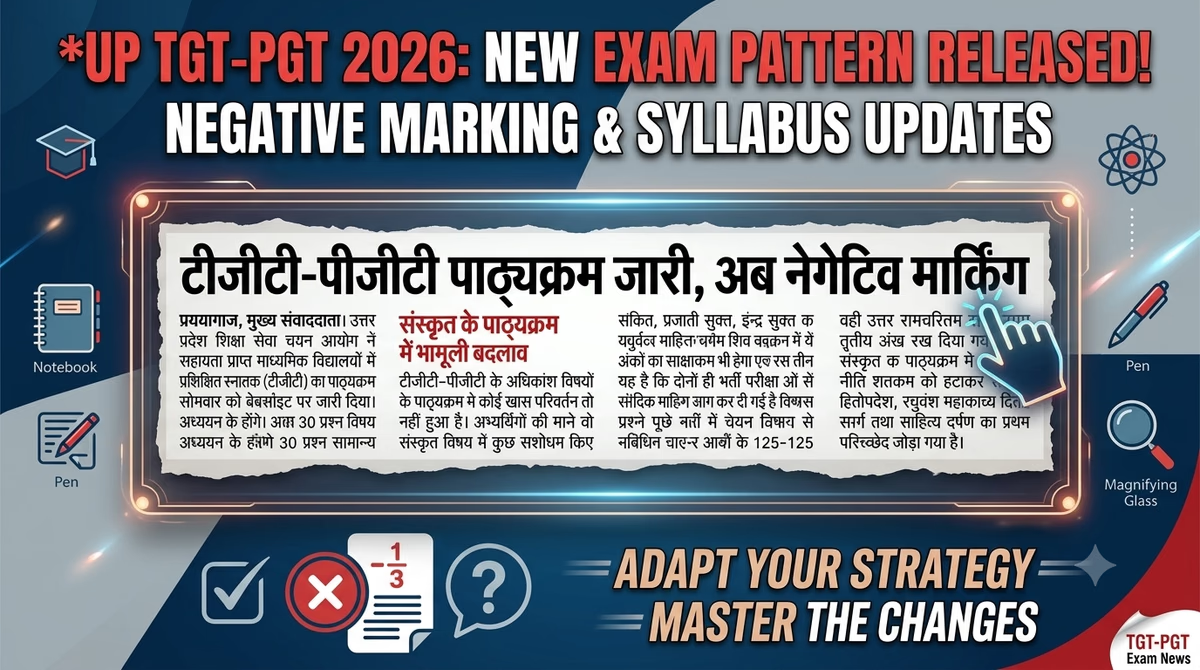
The Uttar Pradesh Secondary Education Service Selection Board (UPSESSB) has officially released the updated exam pattern and syllabus for the Trained Graduate Teacher (TGT) and Post Graduate Teacher (PGT) recruitment examinations.
If you are preparing for UP TGT PGT 2026, this announcement brings major structural changes that directly affect your preparation strategy. Most notably, negative marking has been introduced for the first time, alongside a revamped paper pattern and minor syllabus modifications in specific subjects like Sanskrit.
Here is a complete breakdown of the official notification, updated syllabus guidelines, marks distribution, and strategic tips to help you adapt.
Direct Summary of UP TGT PGT Exam Changes
For quick reference, here are the key updates from the official notification:
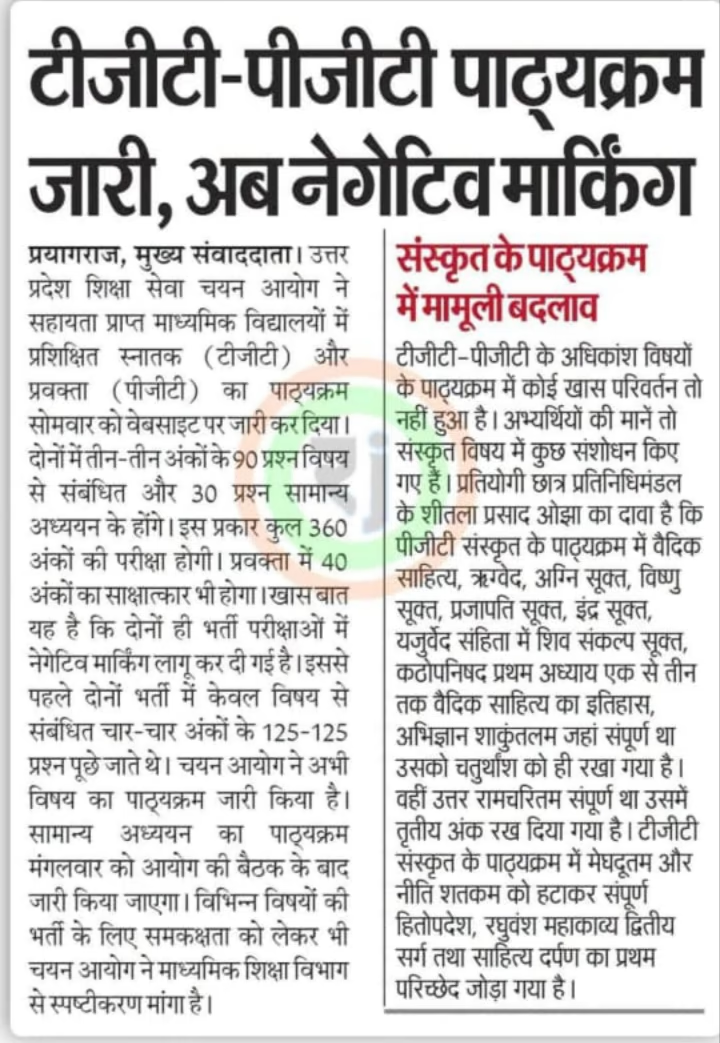
Negative Marking: Now applicable to both TGT and PGT written examinations.
Total Written Exam Marks: 360 Marks (120 Questions total).
Interview Round: 40 Marks (Only applicable for PGT candidates).
Subject Changes: Minor topic revisions in Sanskrit; General Studies detailed syllabus to be published following board review.
New UP TGT PGT Exam Pattern & Marking Scheme
Previously, the UP TGT and PGT recruitment exams consisted of 125 subject-specific questions worth 4 marks each, totaling 500 marks, with no penalty for wrong answers. Under the revised pattern, the examination structure has been overhauled to evaluate candidates on both core subject proficiency and general awareness.
Written Exam Structure (TGT & PGT)
Section
Number of Questions
Marks per Question
Total Marks
Section A: Core Subject
90
3 Marks
270 Marks
Section B: General Studies
30
3 Marks
90 Marks
Total
120 Questions
—
360 Marks
PGT Interview Weightage
For Post Graduate Teacher (PGT) posts, candidates who clear the written stage will proceed to an interview round evaluated out of 40 marks.
Introduction of Negative Marking: What It Means for Candidates
The introduction of negative marking is the most critical update in this notification.
In previous selection cycles, candidates could attempt all questions without the risk of deduction. With negative marking active, accurate selection and strategic skipping will be essential.
Key Implications:
Accuracy Over Guesses: Indiscriminate guessing can significantly lower your score. Focus on precision.
Time Management: Allocate extra time to verify questionable answers before marking them on the answer sheet.
General Studies Impact: Since 30 questions (90 marks) are dedicated to General Studies, mastering foundational GS concepts can give you a decisive edge.
Syllabus Updates: Subject-Wise Breakdown
While the core syllabus for most subjects remains consistent, the board has introduced specific revisions to certain subjects, along with a dedicated General Studies paper.
1. General Studies (GS) Syllabus
The board will release the full itemized General Studies syllabus following an upcoming administrative meeting. The GS section will account for 25% of the written exam (30 out of 120 questions).
2. Syllabus Revisions in Sanskrit
According to candidate representatives and board details, Sanskrit has received key topic updates:
The Selection Board has formally requested clarification from the Secondary Education Department regarding subject equivalency criteria for various positions to streamline eligibility verification.
How to Adapt Your Preparation Strategy
Prioritize Concept Clarity: Because negative marking is active, superficial learning will lead to avoidable errors. Ensure your fundamental understanding of core subject topics is thorough.
Build a Daily GS Routine: Treat the General Studies section as a core scoring component. Practice general knowledge, static concepts, and current affairs regularly.
Take Negative Marking Mock Tests: Practice with simulated full-length tests that include negative marking penalties to build accuracy and test-taking discipline.
.avif)
.avif)
.avif)
.avif)
.avif)
.avif)
.avif)
.avif)
.svg)

.png)